Feb 06, 2026
Beneath busy urban arteries and deep riverbeds, vast networks of oil and gas pipelines, communication cables, and water supply lines are being installed quietly—without disrupting surface traffic or damaging surrounding ecosystems. The engineering force behind this achievement is Horizontal Directional Drilling (HDD) technology. As a core trenchless construction method, HDD is redefining how underground utility infrastructure is built through its precision, efficiency, and minimal surface impact.

What Is Horizontal Directional Drilling?
Horizontal Directional Drilling (HDD) is a trenchless method used to install underground pipelines, cables, and conduits. The process employs a directional drilling rig and specialized tooling to drill accurately along a predetermined bore path, followed by back reaming to create a hole large enough to accommodate the required pipe.
The Mechanics of HDD
Developed in the mid-20th century and introduced to China in 1985, HDD quickly emerged as a preferred solution for pipeline installation. Its fundamental principle lies in the precise control of borehole trajectory using a steerable drilling system.
Construction begins with drilling a small-diameter pilot hole, guided with centimeter-level accuracy. A reamer is then used to enlarge the pilot hole to the desired diameter, after which the pipeline is pulled smoothly back through the bore. This method eliminates the need for extensive excavation, requiring only small entry and exit pits. In effect, HDD creates a controlled “subterranean tunnel” for underground utilities.
Wide Applicability and Enhanced Safety
HDD technology offers exceptional versatility. It is widely used for installing oil and gas pipelines, telecommunications cables, water supply lines, and drainage systems, and performs reliably across diverse geological conditions, including soil, sand, and gravel layers.
Advanced guidance systems enable HDD operations to avoid existing underground utilities and historical structures, significantly enhancing construction safety. This capability is especially valuable in modern cities, where underground spaces are increasingly congested and complex.
Solving Traditional Construction Challenges
The true value of HDD lies in its ability to overcome long-standing challenges associated with conventional open-cut construction. Historically, installing pipelines beneath rivers required water diversion and trench excavation, while crossing urban roads often resulted in months-long traffic closures. These approaches damaged road surfaces and green spaces and led to high restoration costs.
In contrast, HDD allows pipelines to pass seamlessly beneath rivers, highways, and dense building complexes. Construction timelines can be reduced by more than 50%, while overall project costs may drop by up to 30%. In urban environments, HDD prevents traffic congestion and minimizes disruption to daily life. In environmentally sensitive areas, it preserves surface vegetation and natural hydrological systems.
The Environmental Challenge: Drilling Mud Management
Despite its advantages, HDD introduces environmental challenges—most notably the management of drilling mud. Drilling fluid is essential to HDD operations, stabilizing borehole walls, cooling drilling tools, and transporting cuttings to the surface. However, large volumes of waste mud are generated during construction.
Environmental testing has revealed concerning results: selenium concentrations in the liquid phase of HDD waste mud can exceed discharge standards by up to 208 times, while total dissolved solids may surpass regulatory limits by 70.8 times. Such elevated levels of heavy metals and salts pose serious risks to soil and groundwater. Improper disposal can lead to ecosystem degradation, soil compaction, and eutrophication of nearby water bodies.

Future Outlook and Technological Solutions: HDD Mud Recycling Systems
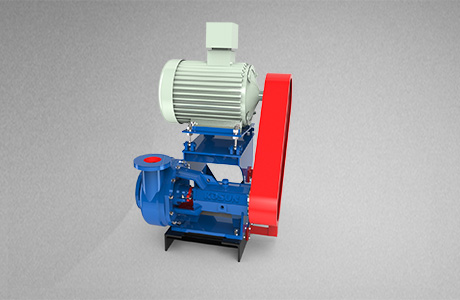
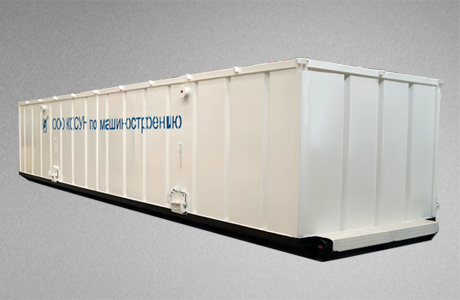
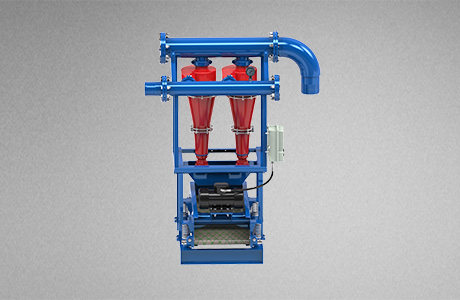
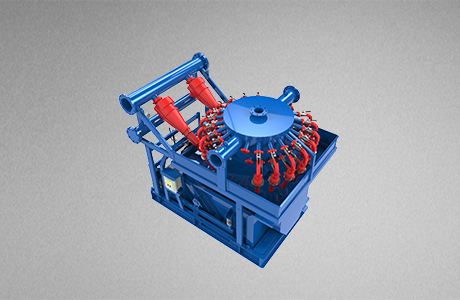
Effective drilling mud management has become essential for the sustainable development of HDD technology. Encouragingly, advanced solutions are now available. HDD mud recycling systems—such as those manufactured by Xi’an KOSUN Machinery—can separate solid particles with ultra-fine precision down to 20 micrometers, enabling efficient purification, reuse, and circulation of drilling fluids.
As mud treatment technologies continue to mature and drilling accuracy improves, HDD is set to play an even greater role in modern infrastructure development. This “invisible builder” of underground pipelines will remain vital in achieving a balance between urban expansion and environmental protection.