Sep 27, 2026
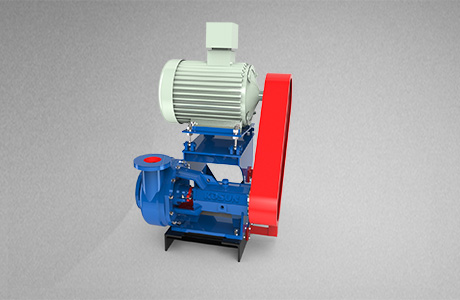
When gas invades drilling fluid, it quietly undermines everything the mud is supposed to do. Density drops, viscosity becomes unpredictable, and downstream equipment faces a growing risk of cavitation and wear. To counter this, engineers developed the centrifugal degasser — also called a centrifugal vacuum degasser — a high-efficiency unit that rapidly strips entrained gases from gas-cut drilling fluids. Operators typically install it downstream of shale shakers, where it supports drilling mud treatment, solids control systems, and mud purification in trenchless engineering. Beyond restoring mud density and stabilizing viscosity, it reduces drilling costs and improves operational safety. It can even double as a high-power agitator to keep mud homogeneous during circulation. KOSUN offers advanced centrifugal degassers engineered for reliable performance in demanding drilling environments.

How the Degassing Process Works
Inside the unit, rotating components generate intense centrifugal force. This force dramatically increases the buoyancy of entrained bubbles, accelerating their rise through the fluid. Once the bubbles reach the surface, turbulence breaks them apart and releases the gas. An integrated blower then extracts the released gas and discharges it safely — either to a designated safe zone or to a flare system. The outcome is fast, secure degassing that keeps the circulation system stable.
Technical Advantages Over Conventional Degassers
Compared with traditional vacuum degassers, the centrifugal degasser stands out for its compact structure, flexible installation, and stable operation. Because it installs directly inside the mud tank, it requires no additional tank-top space — a major advantage on sites where room is limited.
Its modular design brings together the centrifugal cylinder, filtration components, motor, and support structure into one integrated unit. This layout simplifies both maintenance and component replacement, reducing downtime when service is needed. KOSUN's centrifugal degassers are engineered with these practical advantages to maximize operational flexibility.
Performance and Efficiency
The centrifugal degasser performs reliably under high gas-cut conditions while maintaining high throughput, low energy consumption, and efficient separation. Since it mounts directly inside the mud tank, it fits naturally into compact installations without demanding extra space.
Applications and Future Outlook
Operators widely deploy the equipment on both onshore and offshore drilling platforms. It also proves valuable in geothermal wells, shale gas projects, and horizontal directional drilling (HDD). Its dependable gas-liquid separation performance has made it a standard component in modern mud circulation systems.
Looking ahead, advances in automation and intelligent monitoring will enable real-time parameter adjustment and intelligent diagnostics — delivering even more precise drilling fluid treatment.

Conclusion
The centrifugal degasser is a critical component of modern solids control systems. By efficiently removing entrained gases from drilling fluid, it restores mud density, protects downstream equipment, and improves both drilling safety and efficiency. KOSUN is committed to providing high-performance centrifugal degassers and expert support to help customers achieve their operational goals.