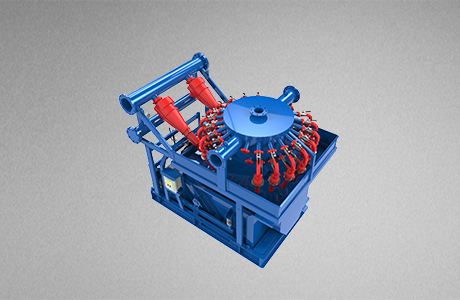
How to Choose a Drilling Fluid Centrifuge in Oil Drilling Engineering
Apr 23, 2026
In oil drilling engineering, drilling fluid centrifuges have become indispensable. Their primary job is straightforward but critical: separate solid particles from the drilling fluid to maintain its performance and quality. Choose the wrong drilling fluid centrifuge, and you risk poor solids control, increased mud costs, and unnecessary wear on downstream equipment. Choose the right one, and you improve drilling efficiency, reduce operating expenses, and minimize environmental impact. So how does an operator make the right choice?
The first step is understanding the basic types of drilling fluid centrifuges. Generally, they fall into three categories. The sedimentation centrifuge uses centrifugal force to make solid particles settle inside a high-speed rotating drum — this is the workhorse of most oilfield solids control systems. The separation centrifuge uses high-speed rotation to separate liquids and solid particles of different densities. The filter centrifuge relies on a filter medium to separate solids from liquids. For most oil drilling applications, the sedimentation centrifuge is the standard choice, particularly for barite recovery and fine solids removal.
Once you understand the types, consider the drilling fluid itself. Density is first: high-density drilling fluids require higher centrifugal force to separate solid particles effectively. A drilling fluid centrifuge that works well on light mud may struggle with weighted systems. Viscosity is next: high-viscosity fluids require stronger drilling fluid centrifuges to prevent clogging. Solid content also matters: fluids with high solid content need more efficient separation equipment. The heavier the solids loading, the more robust the drilling fluid centrifuge must be.
After matching type to fluid properties, evaluate processing capacity. This includes throughput volume — how much fluid the drilling fluid centrifuge can process per hour — and separation efficiency — the proportion of solids it actually removes. There is often a trade-off. Higher throughput may mean lower efficiency, and vice versa. Generally, the higher the processing capacity you demand, the larger the size and power requirements of the drilling fluid centrifuge will be. Operators must honestly assess rig space and available power.
Beyond type, fluid properties, and capacity, several additional factors matter. Bowl speed (G-force) determines how fine a cut the centrifuge can achieve — higher speeds remove finer solids but increase wear. Differential speed between bowl and conveyor affects solids discharge rate. Material construction is critical: drilling fluids are abrasive, so drilling fluid centrifuges with wear-resistant components like tungsten carbide tiles last significantly longer. Maintenance requirements should never be an afterthought — a difficult-to-service centrifuge leads to costly downtime. Automation features like variable frequency drives help operators optimize performance as downhole conditions change.
In conclusion, choosing the right drilling fluid centrifuge requires understanding the three basic types, matching them to your fluid's density, viscosity, and solid content, and balancing throughput against separation efficiency. Bowl speed, wear-resistant materials, maintenance access, and automation features all play important roles. A well-chosen drilling fluid centrifuge recovers valuable barite, removes fine solids, reduces waste disposal costs, and extends equipment life. For any serious oil drilling operation, taking the time to select the right drilling fluid centrifuge is time very well spent.